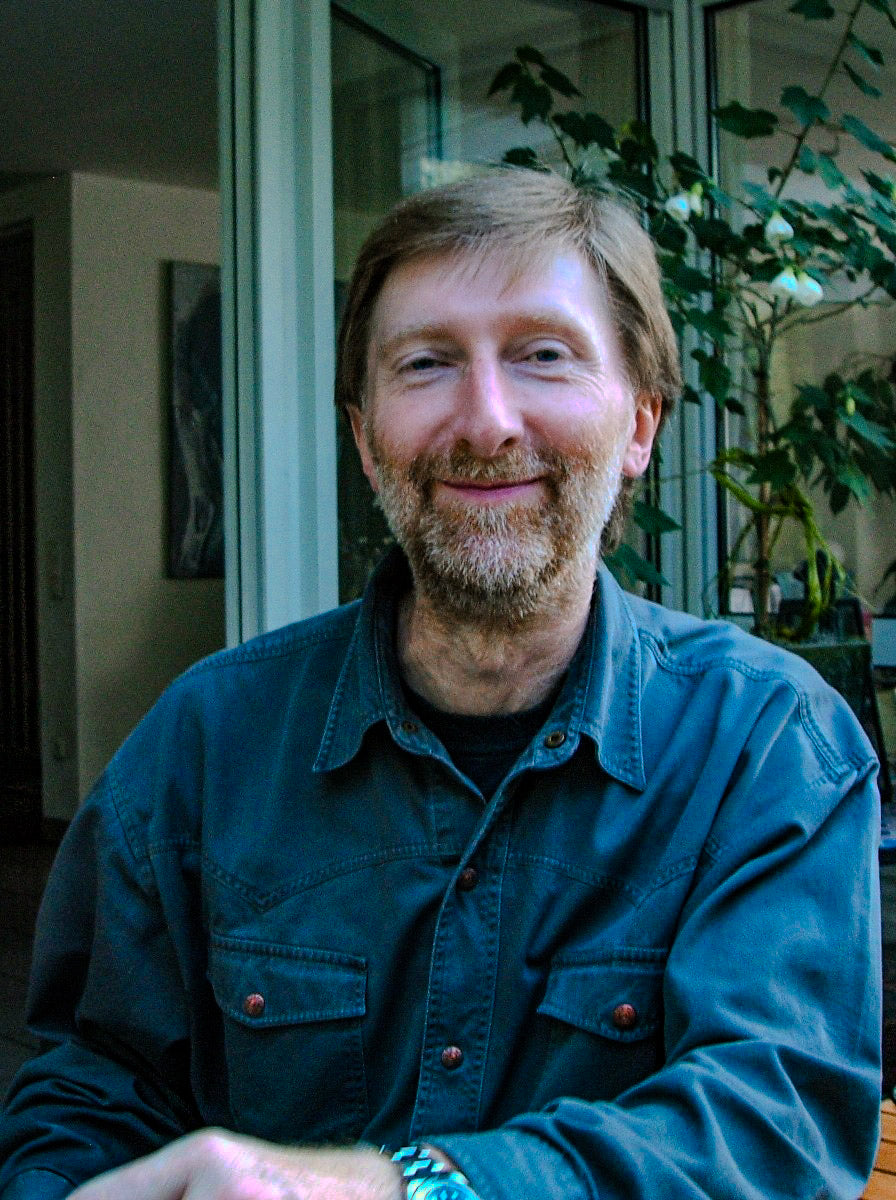
About Peter Wirth


Peter Wirth (1951–2018)

The Archaeology of Color – A Life Dedicated to Art

A person who loved life.

Peter Wirth was not a loud artist. He was a quiet worker with images, an observer,
a magician of color. In a life's work spanning over 30,000 pieces, this Bottrop-based artist created multilayered puzzles of acrylic, light, and time. His works are now found in numerous private and public collections worldwide. They are not just decoration – they are windows into an artistic philosophy that matured over decades.


A Personal Word from Max Wirth

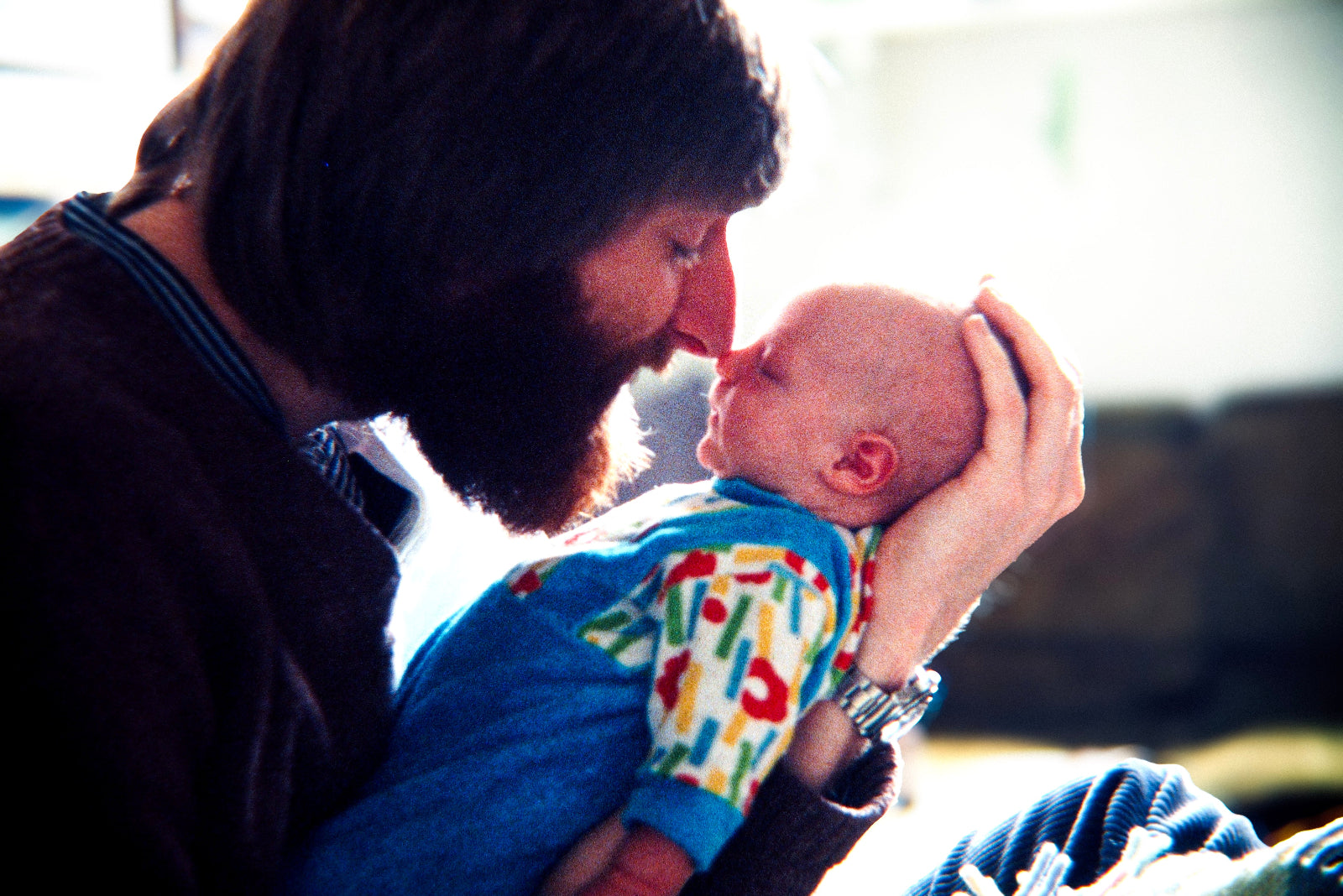
“My father was a thoroughly positive person, my friend and father alike – someone who always had an open ear and always smiled. He loved life in all its facets: our family, nature, cooking, good literature, jazz and classical music, cinema, and painting.

He knew no traditional weekends. He worked daily, passionately, joyfully on his works – not because he had to, but because he couldn't do otherwise.
This positive energy, this unconditional love of life and creation, is embedded in every one of his paintings. With Divine Editions, we want to pass on this love of art and preserve his legacy.”

Max Wirth, son and founder of Divine Editions


The Artistic Journey

From Typesetter to Master of the Folkwang School

Peter Wirth began unusually: as a typesetter in a printing company. But this craft awakened in him a deep fascination with visual design, with lines, forms, light and shadow. This early experience shaped his entire artistic vision.

Through alternative education pathways, Wirth obtained his high school diploma. Afterward, his journey led him to the
renowned Folkwang University of the Arts in Essen – an institution that has produced luminaries such as Otto Dix, Beuys, and Raindorp. There he studied “Graphic Design” under Professor Sabine Tschierschky. He graduated with distinction.

This graphic training remained his foundation. His sure sense of composition,
structure, and the architecture of the line shaped every subsequent brushstroke. For Wirth,
graphics was not a beginning, but a mindset – a way of thinking.

The Printmaking Phase: Etching, Lithography, Craftsmanship

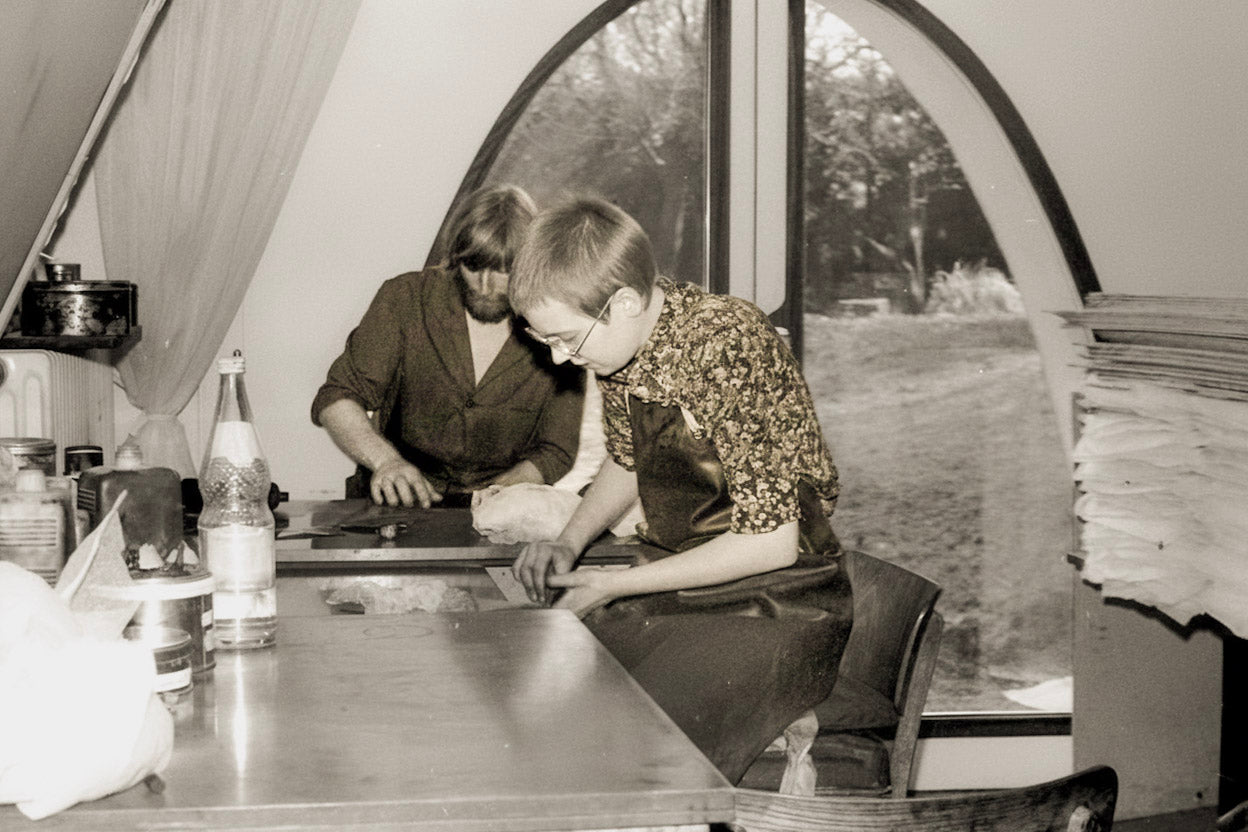
In the 1970s and early 1980s, Wirth dedicated himself to printmaking. Etchings
and lithographs emerged – works of precise craftsmanship that showed an intense interest in the human figure. These techniques were his laboratory for understanding light, shading, and the psychology of line.

In 1977, he had his first solo exhibition at the Jazz & Art Gallery in Gelsenkirchen.
The name was fitting: Wirth was interested in the synesthesia of art forms. Jazz was not music to him, but a way of thinking – improvised, structured, free and precise at once.

Over the years, the following awards followed: 1978 Prize at the graphic competition of the Light Metal Society (Essen), 1981 Promotion Prize from the City of Frankenthal, 1982 Scholarship from the Aldegrever Society. Museums acquired works: Haus der Kunst Munich, Kunsthalle Recklinghausen, the Great Art Exhibition NRW in Düsseldorf.

Around 1985, something decisive happened. Wirth left the security of printmaking and
turned to painting. He discovered acrylic paints, glazes, and the technique of
layering.

He was influenced by Informel and Tachism – movements that recognize the chaotic, the
“unvarnished” as an artistic principle. But Wirth's path was his own.

His revolutionary technique: He didn't simply paint. He built his pictures layer by layer, as if uncovering time – like an archaeologist digging for hidden traces. Layer by layer he applied acrylic, scraped it away with a spatula (sgraffito), laid new colors over it, let underlayers shimmer through. The result: works of “pearlescent luminosity” (art critic Jost Funke), in which the artist's work never comes to complete rest.

These works demand active viewing from the observer. They reveal their secrets depending on the time of day, depending on the angle of light. An art print by Peter Wirth is therefore not a static object – it is a living dialogue between color, space, and time.


The Pinnacle: Berlin 1993 – The Egyptian Museum

Speculations on Nefertiti

In the mid-1990s, Peter Wirth ventured an artistic coup that few contemporary artists would have dared: a direct dialogue with the icons of world art.

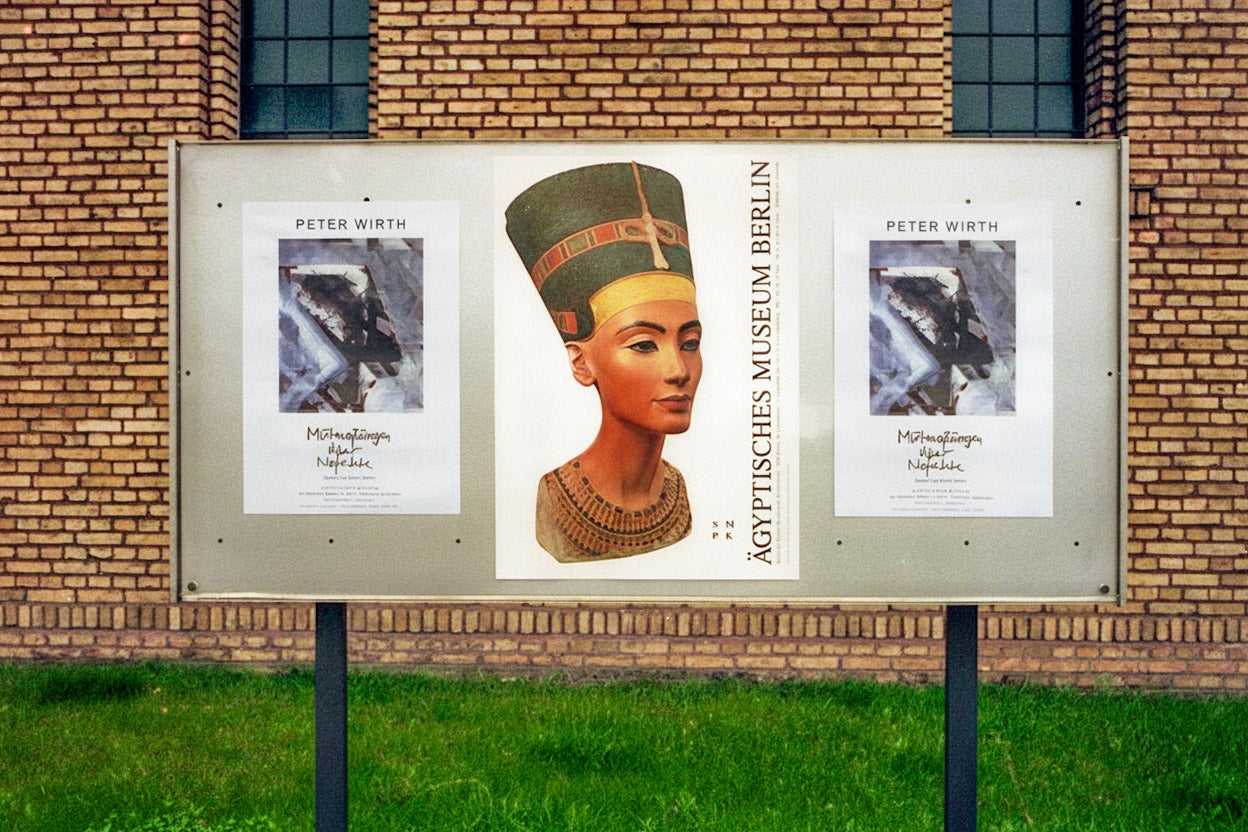
In 1993, he was invited to a solo exhibition at the Egyptian Museum Berlin – a
museum that houses one of the world's most significant Egyptian collections. His exhibition title: “Speculations on Nefertiti”.

Together with Egyptologist Prof. Dietrich Wildung (then director), Wirth posed a provocative question: “What would happen if a modern artist reduced the sacred motifs of antiquity – Nefertiti, the Sphinx, the Horus falcon – to the ‘threshold of recognizability’?

The result was ingenious. Wirth's acrylic paintings hung next to the original Egyptian
artifacts. They were not imitation, not homage – they were an artistic
excavation. Wirth didn't repaint Nefertiti. He painted the “veil of millennia”, the temporal distance, the mystical inaccessibility of the ancient world.

Prof. Wildung later described: “Wirth's works reduce the familiar motifs to the
limit of recognizability. Color lays itself like a layer of history over form.
One doesn't see an image – one sees a thought.”

This exhibition made Peter Wirth internationally known. Art historians took notice.


The Mind's Cinema: Hitchcock, Vermeer, Literature

Late Passion: Film and Photo Art

In his later years – from 2000 onward – Peter Wirth rediscovered photography. Not as a documentary camera, but as an artistic processing tool, similar to a digital brush.

Wirth was a passionate cinephile. He knew the classics by heart: Alfred
Hitchcock, Peter Webber, Jack Clayton. He didn't just watch films – he analyzed, frame by frame, as if they were paintings.

From this passion emerged several series:

The Hitchcock Series

Scenes from Vertigo, The Birds, Psycho, North by Northwest – Wirth processed
these film styles with acrylic, ink, and digital effects. The result: surreal, mysterious,
condensed. Hitchcock's elegant audacity became in Wirth's interpretation a visual meditation on loneliness, tension, and beauty.

The Vermeer Series / The Griet Variations

Fascinated by Johannes Vermeer's “Girl with a Pearl Earring” and its cinematic adaptation, Wirth varied this motif again and again. The face remains diffuse, sfumato – leaving room for the viewer's imagination. Each painting is a new question: Who is this woman? What is she thinking? Every viewer finds their own answer.

The Sisi Series

Empress Elisabeth of Austria fascinated Wirth because of her restless search for perfect beauty and her affinity for photography. Based on historical photographs, Wirth created a series of portraits – portraits of beautiful women from the metropolises of 19th-century Europe. A visual poem about transience, beauty, and longing.

Late Work: Comics and Animation

Wirth also created chalk drawings, comics, and animations based on film classics. These works show an artist who constantly reinvented himself – without betraying his fundamental principles. The love of layering, color, and form remained.


Two Worlds

Peter Wirth was not an artist who switched between two extremes. He was always a complete artist:

  • In the abstract layered paintings, he spoke the language of emotion, color, the unconscious.
  • In the Hitchcock and Vermeer works, his graphic talent allied with his love of narrative, film, and history.
  • In his still lifes and nature representations, he paid tribute to reality – but always filtered through art history, memory, and imagination.

For every art lover, there is a work here that speaks to their inner self.


Biography (Chronology)

Education & Early Career

- December 5, 1951 | Born in Bochum (North Rhine-Westphalia)
- 1960–1969 | School years in Bochum
- 1970–1974 | Training as a typesetter; alternative education pathway; high school diploma
- 1974–1978 | Studies in “Graphic Design” at Folkwang University of the Arts, Essen under Prof. Sabine Tschierschky; graduated with distinction

First Exhibitions & Recognition (1977–1990)

- 1977 | First solo exhibition: Jazz & Art Gallery, Bochum
- 1978 | 1st Prize at the graphic competition of the Light Metal Society (Essen)
- 1981 | Promotion Prize from the City of Frankenthal
- 1981–1985 | Participations in the Great Art Exhibition NRW (Kunsthalle Düsseldorf)
- 1982 | Scholarship from the Aldegrever Society (Münster)
- 1982 | Exhibition Stadtgalerie Altena
- 1983 | 2nd Place at the Art Prize Junger Westen (Kunsthalle Recklinghausen)
- 1984 | Works at Haus der Kunst Munich
- 1985 | Kunsthaus Mettmann
- 1988 | Kunsthaus Essen
- 1990 | Kunstforum Gummersbach

The Breakthrough (1993)

- 1993 | Solo exhibition “Speculations on Nefertiti” at the Egyptian Museum Berlin (in collaboration with Egyptologist Prof. Dietrich Wildung)

Mid-Years & Exhibition Activity (1996–2009)

- 1996 | Residence exhibition Essen (with Gallery AVIVA)
- 2000 | Exhibition Gallery Mönch, Bremen (beginning of a long-term collaboration)
- 2000 | Exhibition Gallery AVIVA, Essen
- 2003 | Jazz & Art Gallery, Gelsenkirchen (Retrospective)
- 2003 | Factory, Ratingen
- 2005 | Gallery Mönch, Bremen (second exhibition)
- 2005 | House of the Central Association SHK, Potsdam
- 2009 | Bremen Art Spring (Gallery Mönch)
- 2009 | Exhibition “Still Lifes” (Gallery Mönch, Bremen)

Late Work & Photo Art (2010–2018)

- 2010 | Museum Quadrat, Bottrop
- 2010 | Exhibition Gallery Mönch, Bremen
- 2014 | Retrospective at Folkwang Museum, Essen (his alma mater)
- 2015 | Exhibition “Magical Places – Magical Moments” (Gallery Mönch, Bremen)
- 2018–2023 | Posthumous collection exhibitions (Gallery Mönch)

Personal

- 1982–2018 | Married to Angelika Hannig-Wirth
- Son: Max Wirth (b. 1981)
- July 16, 2018 | Death in Bottrop


Exhibitions (Selection)

Solo Exhibitions

Year Location & Gallery
1977 Jazz & Art Gallery, Gelsenkirchen
1982 Stadtgalerie Altena
1985 Kunsthaus Mettmann
1988 Kunsthaus Essen
1990 Kunstforum Gummersbach
1992 Kunstraum Marl
1993 Egyptian Museum Berlin
1996 Residence/Gallery AVIVA, Essen
2000 Gallery Mönch, Bremen
2000 Gallery AVIVA, Essen
2003 Jazz & Art Gallery, Gelsenkirchen (Retrospective)
2003 Factory, Ratingen
2005 Gallery Mönch, Bremen
2009 Bremen Art Spring (Gallery Mönch)
2009 Gallery Mönch, Bremen ("Still Lifes")
2010 Museum Quadrat, Bottrop
2010 Gallery Mönch, Bremen
2014 Folkwang Museum, Essen (Retrospective)
2015 Gallery Mönch, Bremen ("Magical Places – Magical Moments")

Group Exhibitions & Collections (Selection)

Year Event
1981–1985 Great Art Exhibition NRW (Kunsthalle Düsseldorf)
1981 Gallery Schüppenhauer, Essen
1981 Gallery of the City of Frankenthal
1982 Gallery Erhard Witzel, Rodgau
1983 “Art Prize Junger Westen” (Kunsthalle Recklinghausen)
1984 Haus der Kunst, Munich
1985 Artists' Association Lüdenscheid
1986 Gallery Inge Donath, Troisdorf
1992 Bruno-Goller-Haus, Gummersbach
1994 Gallery AVIVA, Essen
1995 “Art Without Borders” (Norderstedt)
1998 Kunstforum Gummersbach
1999 Gallery Due, Bochum
2004 Art Institute Annener Berg, Witten
2004–2005 GLS Community Bank, Bochum
2009 Bremen Art Spring
2023 “Companions” (15 Artists) – Gallery Mönch, Bremen

Prizes & Scholarships

Year Award
1978 1st Prize at the graphic competition of the Light Metal Society (Essen)
1981 Promotion Prize from the City of Frankenthal
1982 Scholarship from the Aldegrever Society (Münster)
1983 2nd Place at the Art Prize Junger Westen (Kunsthalle Recklinghausen)

Works & Collections

Major Works (by Style)

Printmaking (1977–1985)
- Etchings and lithographs with figurative focus
- Collection: Haus der Kunst Munich, Kunsthalle Recklinghausen

Acrylic Abstraction – Layered Painting (1985–1993)
- Large-format acrylic-on-canvas works
- Themes: Color space research, “pearlescent” background
- Exhibitions: Folkwang Museum, Egyptian Museum Berlin

Egyptian Mythology (1987–1993)
- Nefertiti (Variations)
- Horus Falcon
- Sphinx
- Collection: Egyptian Museum Berlin, private collections internationally

Still Lifes (1995–2005)
- Pears, Flamingos, Golfers, Sailing Ships
- Medium: Acrylic on canvas
- Size: 70×80 cm to 140×160 cm

Film Art & Photo Art (2000–2018)
- Hitchcock Series (The Birds, Vertigo, Psycho, North by Northwest)
- Vermeer / Griet Variations
- Sisi & Empress Elisabeth
- Comics: Chinatown, Bullit
- Medium: Acrylic, ink, digital image processing, chalk

Urban Landscapes & Modernism (2005–2015)
- City scenes, architecture
- Medium: Acrylic on canvas, 100×120 cm


Why an Artwork by Peter Wirth?

Peter Wirth's art does not impose itself. It convinces through:

- “Gentle sensitivity” (Hans-Jörg Loskill, art critic)
- Intellectual depth (Prof. Dietrich Wildung)
- Craftsmanship precision (Folkwang training)
- Timeless elegance (30 years of exhibition practice)

Whether in a modern law office, a medical practice, an office, or in private living spaces - an art print by Peter Wirth brings calm, culture, and a subtle coloration to the room that never becomes boring. The works reveal new nuances depending on the time of day and angle of light.

This is a dialogue between artist, work, and viewer.


Gallery Mönch – Wirth's Long-term Partner

Since 2000, Gallery Mönch in Bremen-Oberneuland has been the artistic and commercial anchor of Peter Wirth's work. Gallery owners Christine and Jochen Mönch recognized the significance of his work early on and committed to the continuous presentation and mediation of his pieces. To this day, Gallery Mönch remains the central point of contact for collectors and art enthusiasts.


Contact & Ordering

With Divine Editions, we work with the same quality philosophy that Peter Wirth pursued throughout his life: No compromises in materials, printing, and packaging.

Each FineArt print is produced exclusively for you in gallery quality – at WhiteWall
in Germany and to the museum standard of an international museum.

If you have any questions, please contact us.


Acknowledgment

This project would not exist without the support of Christine and Jochen Mönch (Gallery Mönch), Prof. Dietrich Wildung (Egyptian Museum Berlin), art historians, and friends of the artist. We thank all collectors who preserve Peter Wirth's work.

Divine Editions – The Legacy of Peter Wirth.


About Our Reproductions


All artworks offered in this shop are fine art reproductions—not original works. Peter Wirth's original artworks (paintings, drawings, prints, and photographs) remain in private collections and are not for sale.


Our reproductions are professionally produced by Bay Photo Lab, Santa Cruz, California, using high-resolution imaging and archival printing processes. Each reproduction is custom printed to order and available in two formats:


Fine Art Paper Print: Printed on archival Hahnemühle Photo Rag 308gsm paper using pigment-based inks.

Acrylic Glass Mount: Face-mounted behind premium UV-protective acrylic on Dibond substrate for enhanced durability and contemporary presentation.


Exclusive to Divine Editions: We are the only authorized retailer of Peter Wirth reproductions. You won't find these artworks anywhere else.


When browsing by "Original Medium," you're filtering by the technique Wirth used to create the original artwork—helping you discover reproductions based on the aesthetic of paintings, drawings, prints, or photographs.