
Tulip Art for the Dining Room: Color, Size, Height
The dining room is where a picture is looked at longest: over breakfast, through long dinners, in conversation. That makes it the place for dining room wall art you will not tire of, and tulips suit it well. They are a still life that is never quite still, with stems that lean and petals that open.
Peter Wirth (1951–2018) painted them again and again, in gold, in blue light, in the dark. Here is how to choose color, size and height for the wall above your table or sideboard.
At a glance
- Color: gold grounds for rooms lit by candles or low lamps, blue grounds for bright rooms with white walls.
- Above a sideboard: about half to two thirds of its width, 8 to 10 inches above it.
- On an open wall: the center about 57 inches from the floor.
- Long wall: three smaller sheets, 2 inches apart.
Warm or cool: choose tulip art by evening light
Gold and ochre grounds, as in Tulips VII, warm a room lit by candles or low lamps and sit well with oak and walnut. Blue grounds, as in the tulips in blue light, calm a bright room with white walls.

Choose the picture by the light the room has in the evening, when it is used most.
How big, and how high
- Above a sideboard: a picture or group about half to two thirds as wide as the furniture looks settled. Leave 8 to 10 inches between the top of the sideboard and the bottom of the frame, so the two read as one arrangement.
- Above the dining table: hang the picture a little higher, so it stays in view over the heads of seated guests, and center it on the table rather than on the wall.
- On an open wall: place the center of the picture about 57 inches from the floor, roughly at eye level.
- One sheet or three: a single large sheet, 16 × 20 or 18 × 24 inches, holds the wall on its own. Three smaller sheets in a row bring rhythm to a long wall; leave 2 inches between the frames.
Before you drill, tape paper templates in the size of each frame to the wall and live with them for a day.
On every work page, “See it on your wall” places the print to scale on a photo of your own wall, and the photo stays on your device.
Tulip sets for long walls
The tulip sets bring three works from one series together, matched in color and format, among them:
A set never costs more than its sheets bought individually, because the volume discount is already included in the set price, and the sheets arrive together in one delivery.

What arrives at your door
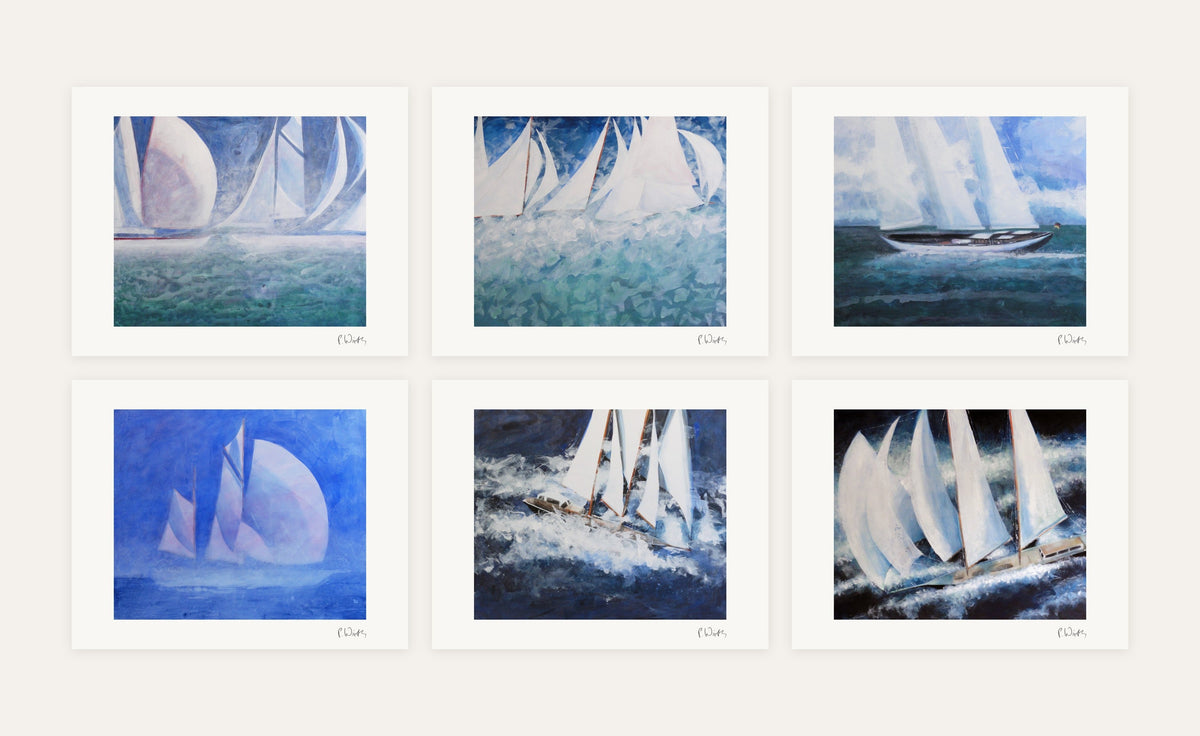
Every sheet is a print after Peter Wirth on Hahnemühle® paper, printed to order, with a white border and its own certificate naming the work and the original. Many works are also available framed in a slim black wood frame.
If one of the tulips already has a place in your dining room, start there and let the wall grow around it.